Unclogging the water

On our recent trip braving the raging waters of the Breede River (it really wasn’t that ragey, if I’m honest), one thing we did notice was a lot of Water Hyacinth (Pontederia crassipes – formerly Eichhornia crassipes). This fast-growing invasive alien is actually really bad news for the Breede and every other South African waterway that it invades. It’s categorised as NEMBA 1b:

NEMBA Category 1b invasive species are high-priority alien plants or animals in South Africa that must be controlled, and wherever possible, removed and destroyed. Landowners are legally obligated to manage these species under an invasive species management program. They cannot be planted, traded, or kept without a permit.

Native to the Amazon, it’s been around in South Africa since the 1960s, but hit the headlines in recent years with the huge issues that it has caused at Hartebeespoort Dam, up country.
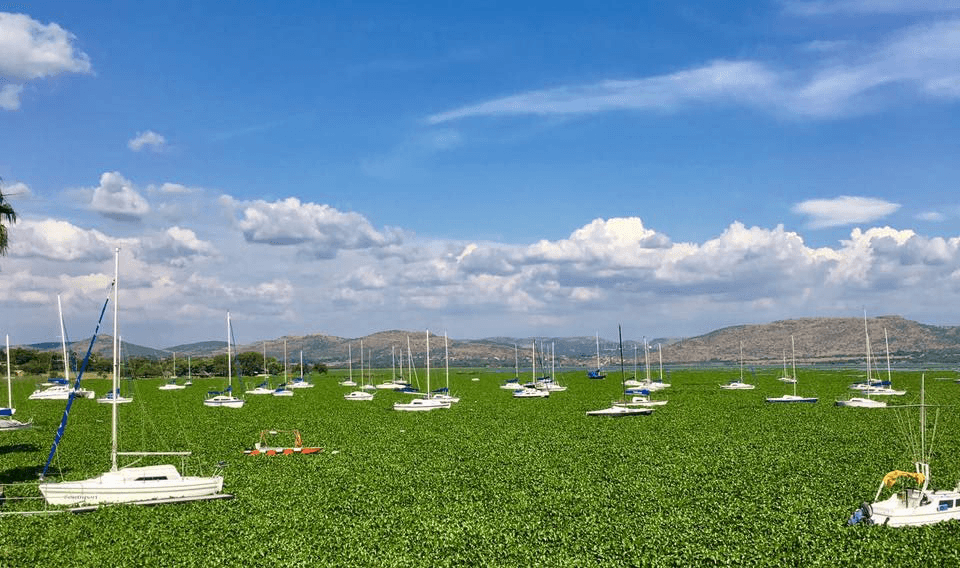
Hypereutrophication, caused by run-off of agricultural fertilisers and wastewater treatment effluence led to an abundance of nitrogen and phosphorus, and made it an ideal environment for hyacinth to thrive. Not only did it physically choke the dam, but the effects of the water surface coverage caused “dead zones”, exacerbated by the presence of toxic cyanobacteria.
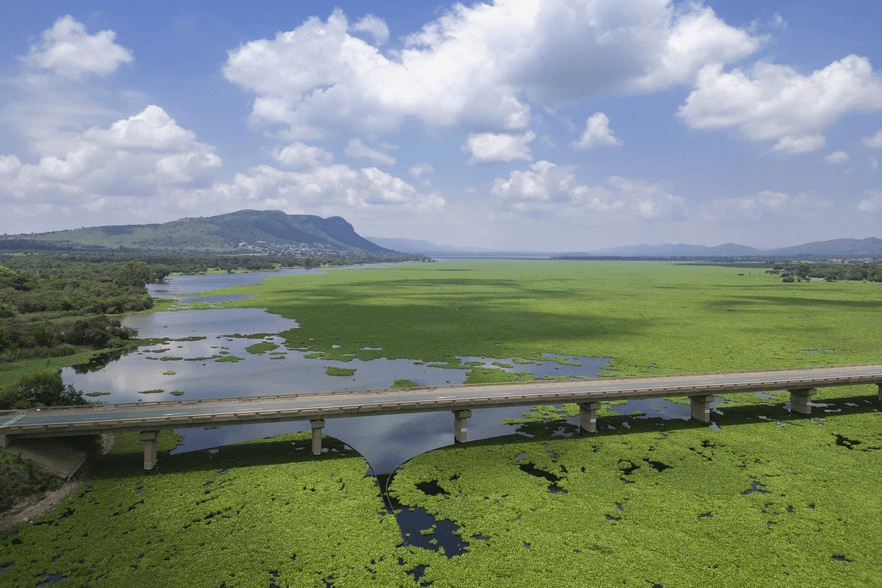
It’s nowhere near that bad on the Breede – yet – but every little crevice at the side of the river, and every little eddy behind the rocks had at least some of it making its home. And you could see how easily it spreads, with small pieces breaking off and floating downstream to find a new spot to settle, regenerate and then repeat the cycle.

So what can be done?

You can kill it with fire herbicides. After all, it’s just a plant. Of course, the problem with this approach is that everything else around gets herbicided as well. By definition, these are nasty, toxic chemicals, and not really something that you want to be chucking into your waterways, effective as they are at killing the hyacinth. It’s a far from ideal solution.

And you can dredge it out. Because it floats on the surface of the water, it’s not too hard to get underneath the plants and load them onto a barge. But the sheer scale of the problem and the speed with which the hyacinth grows and spreads make this a tall order, and the specialist equipment and time required make it very expensive.

In Kenya, they’re still using this approach, albeit by hand, and not by mechanical means. Dredging it out of the rivers and lakes, and using it as a biomass fuel to generate heat and biogas for use in the local areas, and even utilising the plants’ stringy, fibrous consistency to make packing and packaging materials as alternatives to plastic.

That hasn’t proven effective in South Africa. But there is good news on the Hartebeespoort issue. A team from Rhodes University has developed a biological control: the planthopper Megamelus scutellaris.
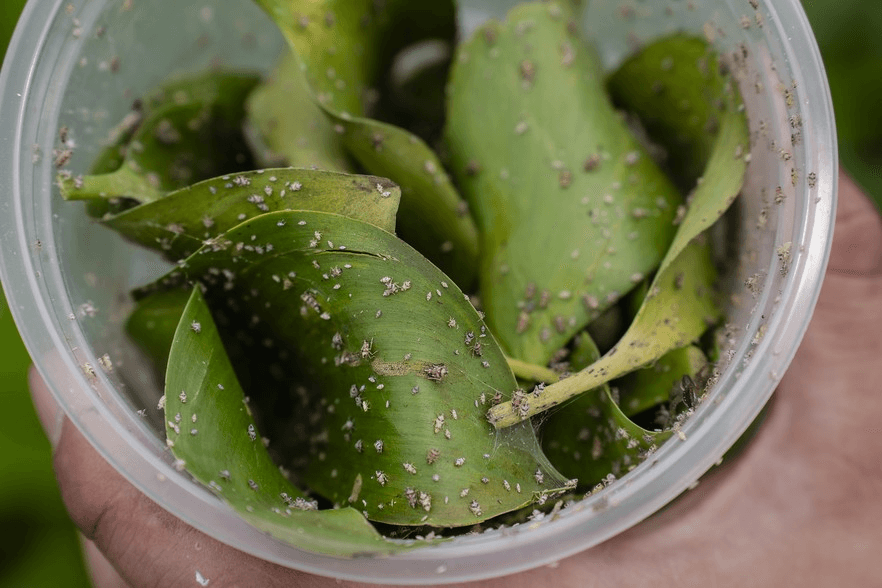
It’s been used elsewhere in the world to effectively control P. crassipes, and it’s been introduced as part of a community and stakeholder engagement programme on the Hartebeespoort, with satellite rearing and release stations dotted all around the perimeter of the dam.
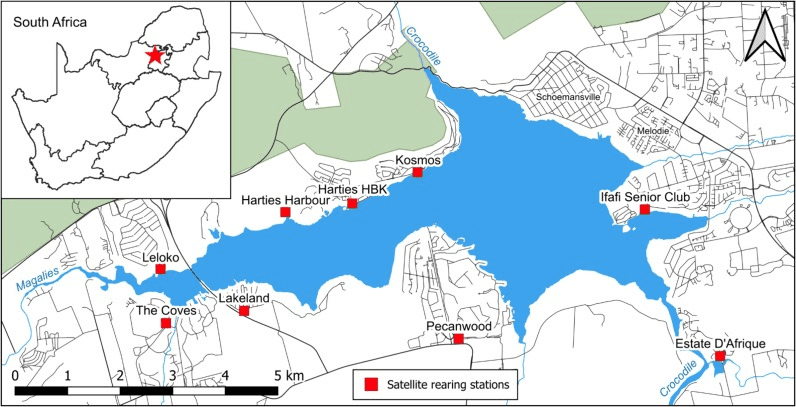
And it’s slowly but surely working. Hyacinth seeds remain viable for up to 20 years, and so there is no quick fix, but the programme is lowering the seed load each year by stopping the plants from blooming.

Additionally, nanobubble technology is increasing the saturated oxygen and lowering the amounts of nitrogen and phosphorus in the water, making it a less attractive site for invasive plant growth. Every little helps.

We’re getting there: on Hartbeespoort, at least.

Hopefully, these efforts can be transferred to the Breede and other areas to stop the hyacinth before it becomes the problem that it has up North.
OK. That’s slightly underwhelming.

After the floods in Stellenbosch (looks like we made it out of there just in time), and the continuous rainfall over the weekend (and quite a bit on either side of it), I was expecting some dramatic upturn in the dam levels.

After all, we have had a total of 148mm of rain in 72 hours (Friday 8am – Monday 8am), and everything around this particular corner of the continent is fully saturated. Damp. Soggy.

And the dams? UP – obviously – by a whole…

0.1%

[sad trombone]

Oh.

That’s not to be sniffed at (although I did very much sniff at it when I saw it), being almost 900 million litres or basically 1 day’s supply to the Mother City. But it is a little underwhelming*.

Thankfully, it’s not the true result of the weekend’s downpours.

A lot of the rain didn’t fall directly into the dams, and so it will take its time to get there. Next week’s reading should hopefully reflect the effects of the recent weather a little better.

Because honestly, why did we have to endure the pain of that weekend for absolutely no gain whatsoever?

* this sentence was sponsored by Understatements SA (Pty) Ltd.
Your go-to organisation for disappointing commentary.

5 weeks on

5 (and a bit) weeks on from this day:

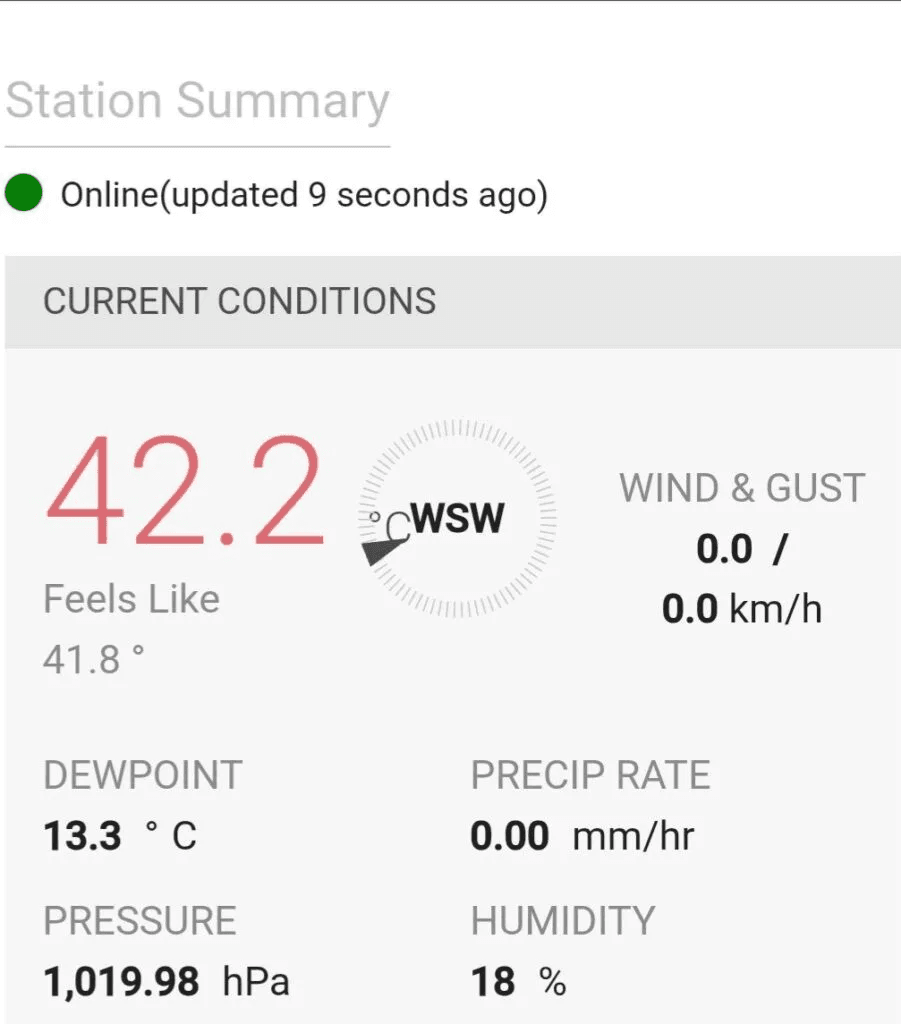
When numerous local records were broken for heat all over the Western Cape. And we find ourselves in Cape Town probably with temperatures pretty much as low as they’re going to get during the day this year.

100mm rain over the last three days – that was only up to 8am this morning, which is when the local figures are collated – and there has been PLENTY more today. (I can still hear it battering down now.)

The wind at Simonstown apparently gusted up to 104kph this afternoon: just short of hurricane strength. It’s been a bit of a wild day, and I’m almost glad that I chose gym over a run.

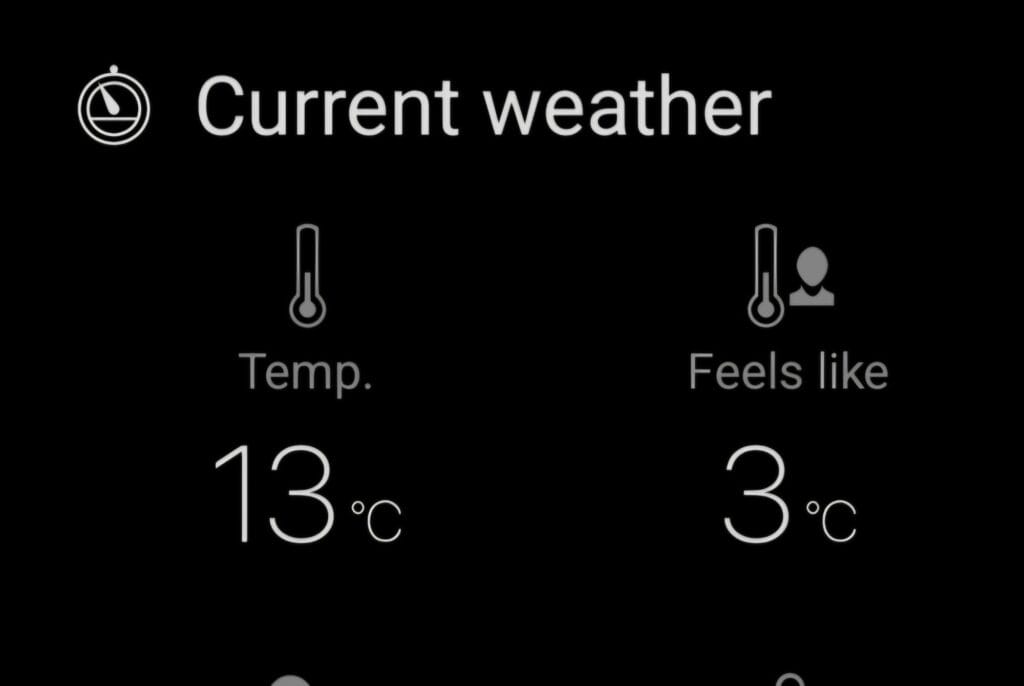
I know that the seasons change, and that the weather changes with them, but you generally do expect the highs and lows to be six months apart, not six weeks.

Thankfully, Wednesday, Thursday and Friday (25oC) are looking actually rather nice, which is great for football, washing, and biology field trips: all of which will be happening on those days.

And we really shouldn’t complain. We need the rain.

I’ll pop a quick post up tomorrow with some updated dam level and rainfall info, for anyone interested. And then a post about invasive plants or something slightly less mundane than the weather.

T&Cs apply.

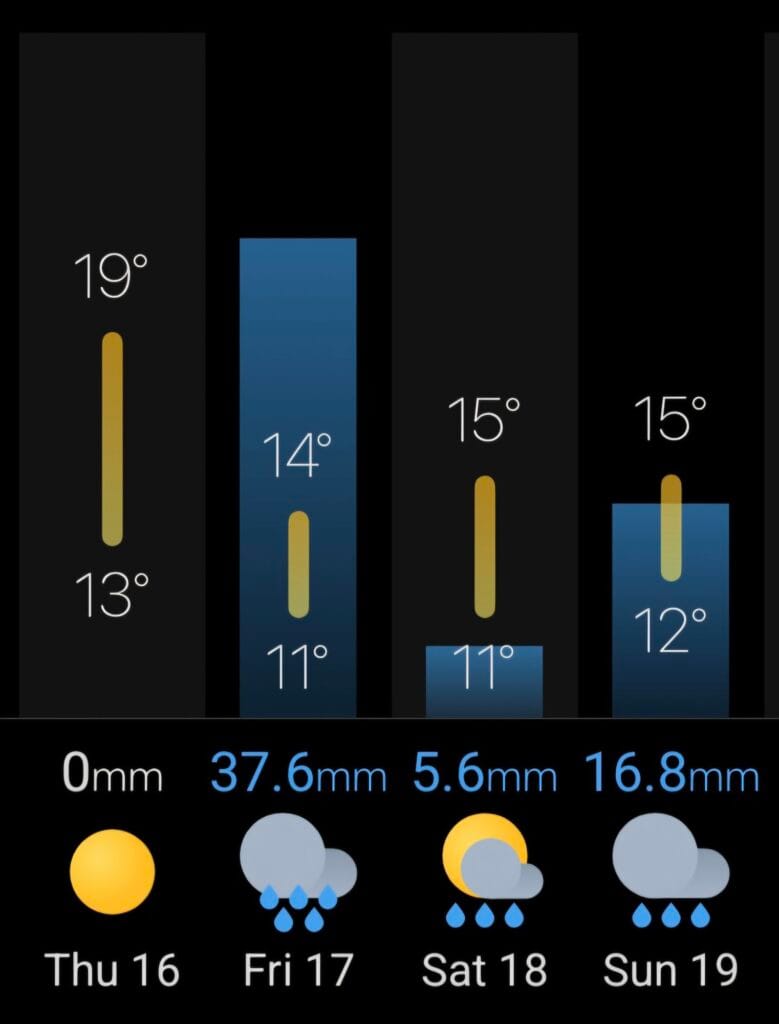
Quite a bit of rain

With Cape Town allegedly desperate for rain (except we’re only comparing the dam levels this year with those from last year which followed the wettest winter on record), Cape Town is going to get some rain.

Quite a bit of rain.

Time to light the fire, grab some red wine, slow cook a beef casserole and hide under a duvet.

Not all at the same time, obviously. Incredibly foolish idea. Mess everywhere.

But it is probably best to just check that your gutters are all clear in tomorrow’s balmy 19oC before Friday hits.

This isn’t the first big storm of the season: it’s not even a proper cold front. But actually, the lack of wind (8kph SW) does mean that once the rain arrives, it’s not going to go away very quickly, and thus will keep falling on the same bit of South Africa (Cape Town) all day.

Edit: It is. Forecast updated. Wet and windy.

Don’t say that you weren’t warned.

Time to regret

This is what pushed them over the edge. An AI depiction of Trump as Jesus Christ.

Not the illegal ICE kidnappings and separation of families. Not the state-sanctioned murders of America citizens. Not the everyday corruption and insider trading. Not the Venezuela incursion. Not the repeated late night social media rants of a demented despot. Not the rising petrol price. Not the constant BS at the press conferences. Not the nonsense of the tariffs and the cost to American people. Not the demolition of the East Wing of the White House. Not the insidious slide towards dictatorship. Not the desperate pandering to Israel and Benjamin Netanyahu. Not the war on Iran. Not the bombing of the girls’ school and the deaths of 120 schoolchildren. Not the 38,000 times he’s mentioned in the Epstein Files.

Nope.

It was the fact that he published that image above that upset them.

And that really is all you need to know about Trump’s supporters.