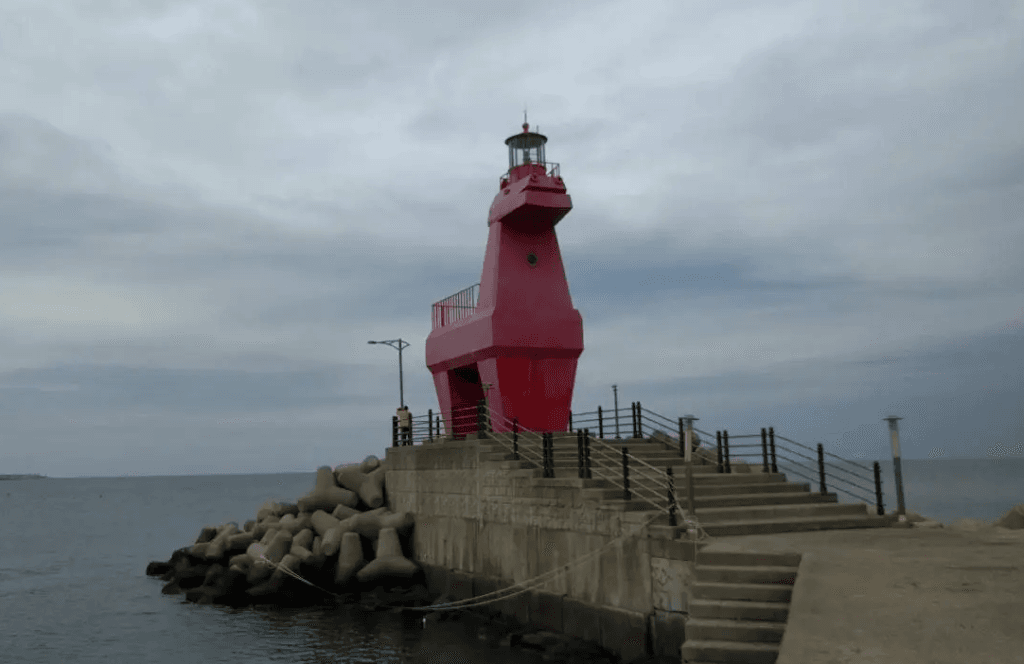
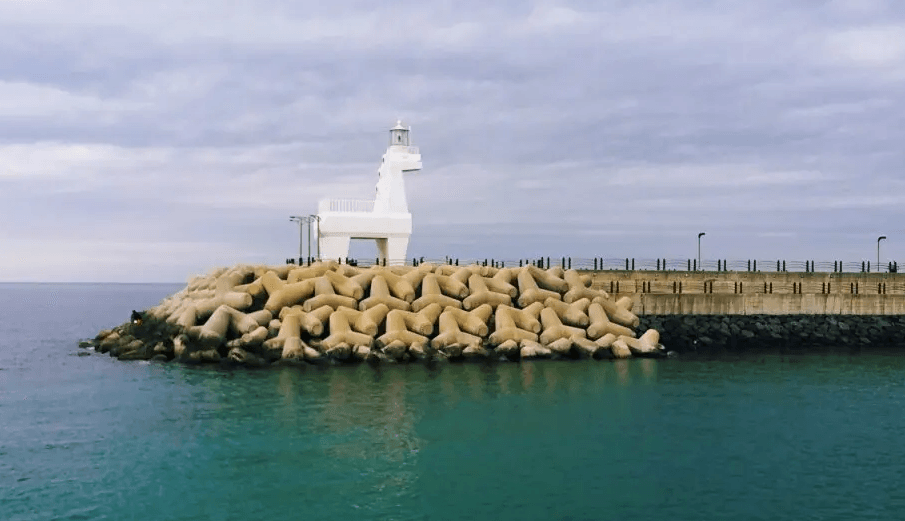
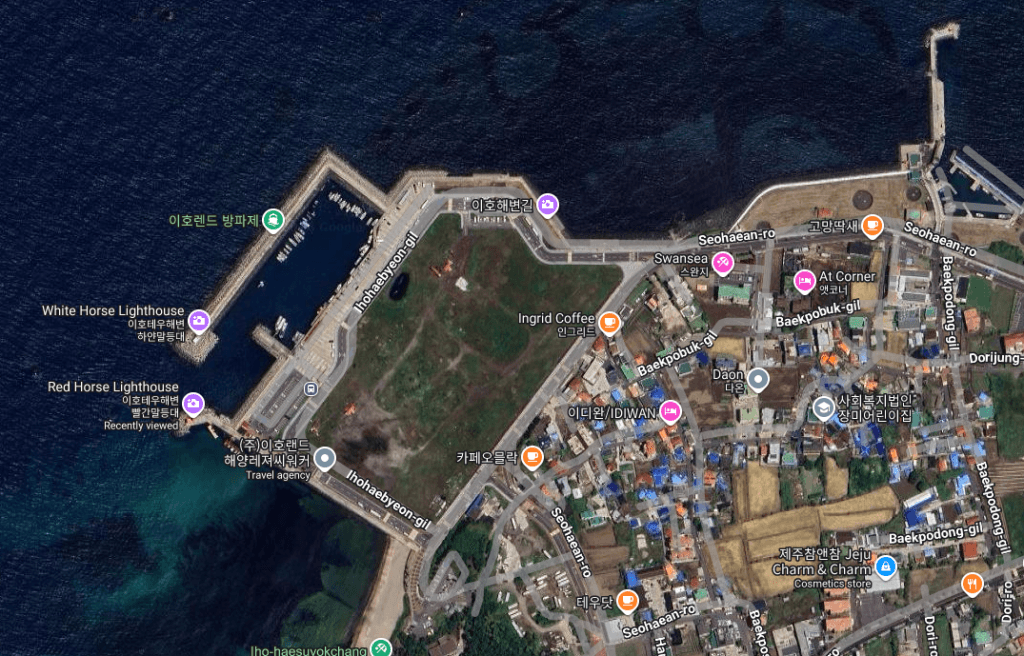
These are modelled on the Jeju Pony – a rare, ancient breed native to Jeju Island, and were completed in 2009. And while they’re not exact replicas of the actual animals (I mean, the horsey ones aren’t those colours and don’t have a light on their heads), they’re a lovely twist on the traditional big tower with a light on the top.
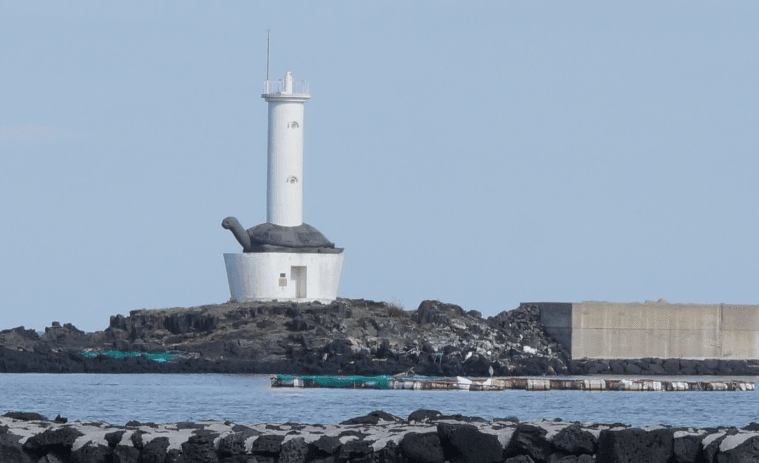
And if you want more animals made into functional buildings – in this case, specifically lighthouses – then you need look no further than… er.. Jeju Island, South Korea, where they also have a 13m high Lighturtle.
That doesn’t really work as well as the horse one, does it?
Anyway:
It’s not just the name that doesn’t work. For me, this one is cheating a bit. That’s just a lighthouse with an added turtle, not a turtle lighthouse. Not that I don’t admire the effort. Just that if you set the bar so high with the red and white horses, I just think the turtle should be rearing up on its hind legs flippers and balancing the light on its nose.
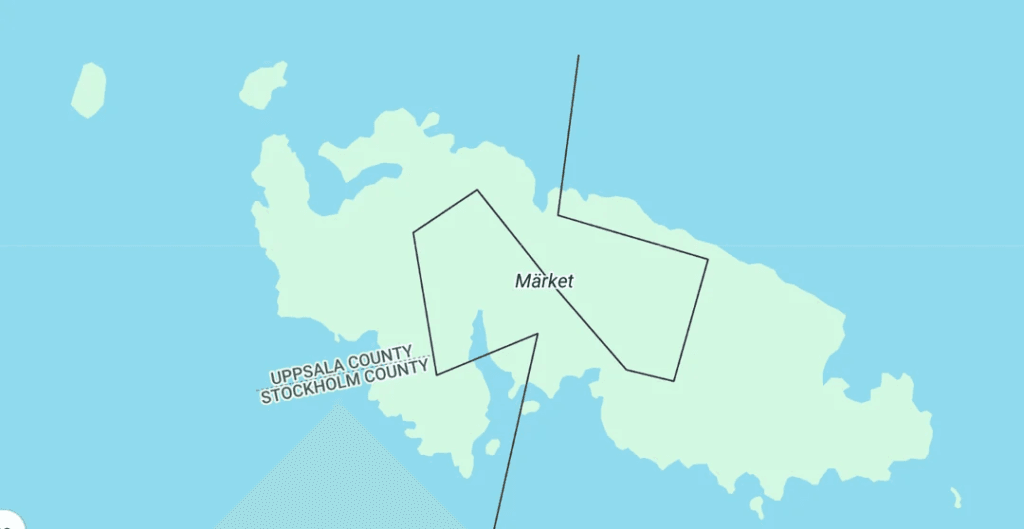
Märket is a lump of rock between Sweden and Finland. It’s only 3.3 hectares in size and there’s really nothing there apart from a lighthouse. Originally, no-one claimed the island as their territory, and so Finland built a lighthouse on there back in 1885. They built it on the highest bit of the island, which was the logical thing to do.
However, when the island was divided between the two countries (because everything has to be owned by someone, right?), the lighthouse ended up on the Swedish side – basically the Western half of the island.
But it was a Finnish lighthouse. Built by Finland and operated by Finland.
So in 1985, the border was moved the reposition the lighthouse back onto Finnish territory.
But you can’t just give up land merely because there’s some other country’s lighthouse on it.
Thus, the adjustment was carried out such that no net transfer of territory occurred, and the ownership of the coastline was unchanged so as not to interfere with each country’s fishing rights.
Which means that the border now looks like this:
The interlocking idea does stop the two countries drifting apart. Which is nice.
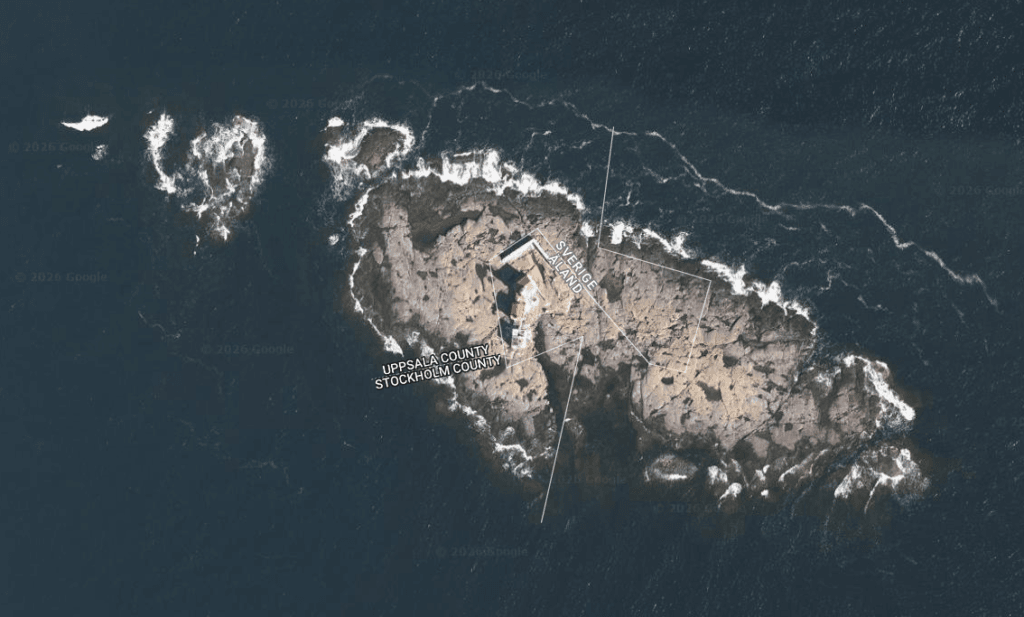
And in real life:
Åland (representing Finland here) being the autonomous, demilitarized region of Finland located in the Baltic Sea between Sweden and Finland. It lies just to the east of Märket and they speak Swedish there, even though it’s actually Finnish territory.
The border is regularly resurveyed every 25 years by officials representing both countries. In case… it changes?!? The last such joint inspection took place in August 2006. The border is marked by holes drilled into the rock, because the seasonal drift ice would shear off any protruding markers.
Because of the Nordic Passport Union and the Schengen Agreement, there have been no passport checks or other border formalities at the border since 1958, so intra-Nordic/intra-Schengen visitors may visit the island freely.
I’ve still not managed to find out why there is an additional county border on the Swedish side. This seems unnecessarily bureaucratic.
Despite the name, there are no shops on Märket. In fact, there really only is the lighthouse.
But that, and the crazy border, makes this a great place to learn about for the nerds that read this blog.
This is the Trwyn Du Lighthouse in Wales. Well, where else would it be with a name like that?
But it does look lovely and chunky.
Lighthouses are great because they light up and stop ships and boats from hitting rocks at night. But this one has an added trick: it has words on it to prevent ships and boats from hitting rocks during the day, as well.
“NO PASSAGE LANDWARD” it says, because if the tide is in, you might think that there was.
And there clearly isn’t.
And in case you didn’t notice the huge letters on the lighthouse, there’s a big sign on the land as well. Just so that the local cyclists have something to ignore.
These warnings do rather suggest that, despite the presence of a 95ft high lighthouse, people – and by “people”, I mean “sailors” – have felt that they were safe to try and sneak through nearer the land than the actual tower. I can’t actually imagine what sort of mind you would have to have to think that this would be a good idea. Lighthouses are famously built on big, sharp rocks, and generally, giving a lighthouse a wide berth (good nautical terminology) is a sensible thing to do. But if you were to decide to go near a lighthouse, especially one built so very close to the shoreline, then I would think that choosing the deeper, wetter side would be an absolute no-brainer.
Interestingly, Cape Agulhas Lighthouse doesn’t have any big writing on the side, nor does it have a sign telling you where you can or can’t go in relation to the structure. But I wouldn’t suggest that you try and get your boat through the landward side of that one, either.
Note: I ran the concept of this post past a reader before I wrote it, and I got the impression that I maybe needed to find a different angle. This can like to be that angle.
Now. On with the post.
Bring back Bok!
That was my cry when I started getting adverts and flyers for this concert all over my socials and emails:
For those who aren’t aware, I have been plagued by Afrikaans singing sensation Bok van Blerk for many years now. Much like Herpes, your presence on his mailing lists is something that you simply can’t get rid of, no matter how many drugs you take or how desperately you try.
But could Lighthouse – that’s these guys:
We are Lighthouse, a family band that loves making music for Jesus, our Lord, and Savior!
actually be worse than Bok?
Yes. Yes, I rather think that they could.
They’ve been aggressively marketing their upcoming Praise and Worship Aand (evening) in Struisbaai this weekend all over my internet. They might even have taken it further: I haven’t looked at the front of my house, but it wouldn’t surprise me if their ubiquitous message had been daubed all over there as well.
They’ve also been punting their BIG SONG: Fear Of The Lord (negative reinforcement is rarely a successful means of control, and this title doesn’t seem to suggest a good way to run any sort of organisation to me) in partnership with the popular series “The Chosen”, on Youtube (76 subscribers). They tell us:
Go stream it free on The Chosen App. It’s a must-watch!
Hmm. Citation required.
At this point, I usually say something along the lines of:
I did this, so you don’t have to.
But in this case: no chance. You’re on your own.
I did watch the music video though:
Part smiley Jesus (especially when he realises that he’s turned the water into wine, lol), part Afrikaans singing family in their local school hall.
But wait. There’s more!
Binge Jesus for Free on thechosen[dot]tv/app
How exactly do you “Binge Jesus”? What does that process involve?
Yes, in the video, it does seem like he’s a nice bloke. Yes, in the video, she does seem to have a pretty good voice.
But that doesn’t mean that you have to get tangled up with what almost exactly half of Americans think saved Donald Trump from that bullet in Pennsylvania.
Let’s cut to the chase: I won’t be down in Struisbaai this weekend, and so I won’t be seeing Lighthouse in concert at the Suiderlig Dienssentrum. I will miss Pastor Walters Joubert from Bredasdorp.
Their appeal to:
Kom geniet die Aand saam met ons!
has fallen upon stony ground.
They should at least understand that metaphorical reference.
Meanwhile, in a cruel twist of fate, look who has pulled into my inbox again this afternoon:
This time, he’s singing about the threat that the Afrikaans people and language are [allegedly] facing, and trying to inspire (and here I quote):
…a new generation of Afrikaners who would like to remember the past, preserve it and build on what was good.
Ah yes. The good old days in South Africa.
Bit awkward. Especially since the title of the song is in Dutch (although there is a lengthy backstory, which I read, so you don’t have to) (see? I am a nice guy, really).
Oh man. Nationalist politics or Organised religion?
My two most very favourite things which are doing somuch the make the world a better place right now.
Lots and lots (and lots) of ferrying people around today. I’d have made a fortune if I’d registered as some sort of metered taxi or e-hailing service.
Sadly though, I didn’t do that, and so it’s just been a lot of financially unrewarding running around: schools, taxi ranks, hospitals, more schools, stables, and – inevitably – Dodgeball training.
If they don’t win this World Cup, it won’t be through lack of effort.
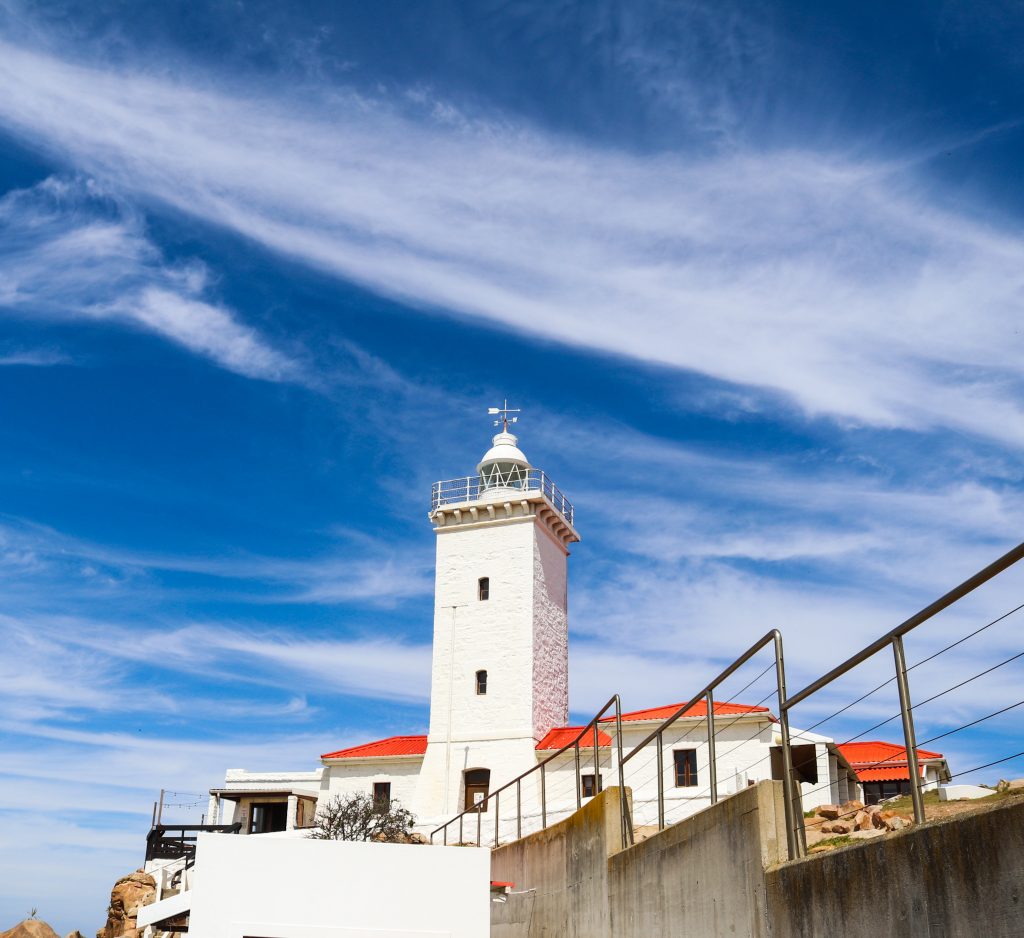
So, in the absence of anything more substantial, here’s an image of the lighthouse at Cape St. Blaize. Just because.
13 metres shorter and 15 years younger than the iconic Cape Agulhas lighthouse, climbing to the top of this one was one of my highlights of our recent trip to the Mossel Bay area.