Called it

Remember this post from last week, expressing disbelief and dismay at the alleged plans to spend R22 million on a Big Flag?

The Government said:

This has the potential to unite people as it becomes a symbol of unity and common identity.
The project is envisaged to contribute towards nation-building and social cohesion. 

And I said:

Well, guess what happened?

This week, pisspoor Minister (apologies for the tautology) Nathi Mthethwa launched the Big Plan for a Big Flag, and the nation – all built and socially cohesed – turned around together as one and told him to Tsek.

Now, having “taken note of public discourse” (which was basically a collection of suggestions, generally ending with the word “off”) and:

In upholding these ethos and the inalienable rights of citizens to be heard, the Minister of Sport, Arts and Culture has directed his department to review the process related to the Monumental Flag in its totality.

Now, this is actually a Good Thing. It is very unusual for a Minister or any member of government to actually give a toss what the public think. And that’s because those ministers and members of government are safe, privileged and untouchable. They don’t have to listen, because there are no consequences whatsoever for them not listening.

So Mthethwa apparently hearing the er… “discourse”, and actually having some sort of reaction – albeit merely “reviewing the process” at this point – is to be applauded.

The real acid tests come when: 1. there is a reasonable outcome to the review – and that doesn’t necessarily mean that the project is dropped: maybe they find private sponsorship for it, for example; 2. the next time something like this crosses Nathi’s desk, he remembers this situation and says “no” before it goes any further; and 3. any other Minister looks at this situation and Mthethwa’s reaction, and chooses to listen to the public regarding their feelings on any given project or idea as well.

Optimistic people may think that this could be a watershed moment.
The realists amongst us have already drunk half our glass and we’re ordering a brandy chaser to deal with the inevitable disappointment.
Lots of things

First off, it’s our son’s last day at school. Sort of, anyway.
He’s suddenly (yesterday, at least) 16 years old and he starts his exams next week. Thus, his study leave begins when the school bell rings this afternoon and wow… how scary is it that he’s so grown up already?

It’s terrifying.

Of course, the plan is for him to go back to school later this year and study much, much more, but technically, if he wanted to leave school now – he could. I am not ready for this news.

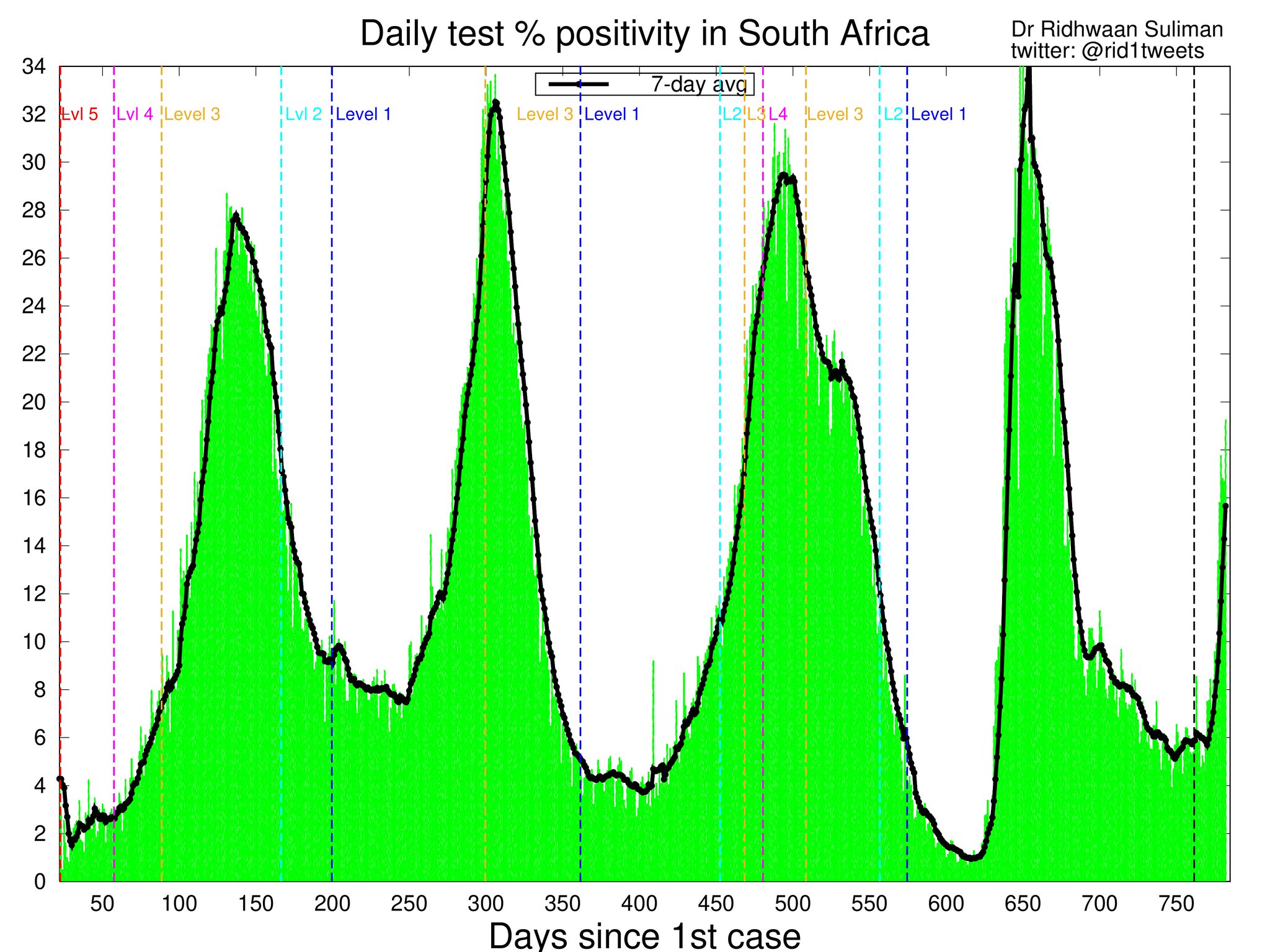
Next up, there’s Covid everywhere. (So we’re trying to keep the boy away from people because of those exams next week.) Every other conversation begins with someone who has got it. So yes, anecdotally, absolutely, because these things do sometimes correlate, but actually, as well.

And while we hope that this BA.4/BA.5-driven fifth wave won’t produce too much mortality, because of vaccinations and prior omicron exposure, there’s plenty of morbidity about, and hospital numbers are beginning to creep up as well.

While every new wave of this virus will be different, depending on what variant is responsible, this does give us a pretty good idea of what “living with Covid” will entail. A new wave every six or so months, with varying – but at the very least, significant – morbidity and mortality. But accurate, comparable data will likely be difficult to come by, with fewer people bothering to test (R300-600 each time) if their symptoms are mild and the restrictions they would face are either unpalatable to them or simply not dependent on the result. Because why would you if you’re an arse or it’s all for nothing?

In other – happier – news, we have a chance to go for a night away later this week to celebrate several (or more) wedded years. The place we’re staying looks stunning, and I began looking for a nearby restaurant for dinner. The local selection is large, and involves chalk and cheese:

Yep, this one is R1695 (£86, $109) (it does look a bit spesh though), but if that seems like too much, literally just across the road:

…you can get a “chip cone” for R35 (£1.70, $2.24).

I think we’ll try and find some middle ground.

Day 730 – Two years

It’s 26th March 2022, which means that it’s exactly two years since South Africa locked down as the Covid pandemic hit our shores.

Kwik maffs: 365 x 2 = 730, see?

Did it work? In limiting the spread of the virus, almost certainly, yes. And in terms of the economy and social effects? Well, there’s clear evidence that lockdowns all over the world had a terrible effect in those regards. And it would be easy to simply say that it wasn’t worth locking down just because of that.

But if you want to do science and maths stuff (more complicated than the effort above), you need to measure like against like, and you need to have controls and all that. We can’t compare the effects of economic hardships with the number of infections prevented or the number of lives saved. And even if we could, who would decide the balancing point where one won out over the other? You could make those data say exactly what you wanted them to.

Not that you would have any data anyway. Because beyond the issue above, there’s the one of controls. How many infections has our lockdown prevented? We’ll never really know, because there wasn’t another cohort that didn’t lock down. And sure, the economy has tanked, but let’s be honest: those same individuals who hate the government because they instituted a lockdown, also hated them before that lockdown because they were tanking the economy.

So good research is hard to do, but that’s not to say we shouldn’t try. When the next pandemic hits, it would be good to have a working policy on the best way to navigate things ready to go. I’m not sure if we can formulate anything like that from where we stand now, though.

So maybe it’s enough to say that pandemics are just crap for the economy and absolutely awful in terms of their human cost; that prevention is better than cure. Agreeing on those might not help us out much of there is a next time, but it’s probably the only consensus we’re going to get.

Day 609 – On Shell

Here’s the story.

Right. Let’s just get my position out in the open at the start, shall we?

1. I appreciate the need to move away from fossil fuels.
2. I would love to have a simple, straightforward, economically viable way to not use fossil fuels anymore.
3. I would rather that Shell (or anyone else) were not doing seismic testing in the waters around South Africa.

BUT...

We all use fossil fuels every day here in SA.
Our electricity here comes (when it comes) – overwhelmingly – from coal, diesel and gas.
Our cars use petrol, and if they did use electricity, then that electricity would come – overwhelmingly – from coal, diesel and gas.
Eskom chucks out about 18 million tons of CO2 each and every month.

We need to understand that the vast majority of this country has no choice but to use dirty fuels to live their lives. It would be great to change, but we can’t just switch that off: our power grid doesn’t work full stop, let alone work with clean or renewable sources of energy.
And we should certainly be trying to step away from fossil fuels, but as you are flinging around your hashtags and basking in the righteousness of your slacktivism, please remember that we need to get our energy and electricity from somewhere: someone has to provide it.

And why shouldn’t that be Shell? How do their seismic surveys and oil drilling habits differ from whoever’s powering your car today, as you “#BoycottShell” and go to Engen or Sasol or BP?

Do you know? Do you care? Or is it just about jumping on a conveniently passing (hopefully hybrid-powered?) bandwagon?

And if you are going to pop online and tell us how to live our lives, and which dirty oil company we should use over which other (I love the “tip the pump attendants” idea, by the way, lol!), then at least think before you post.

After all, nothing quite says “Leave our oceans alone” or #SaveOurOceans like a “cleverly” altered corporate logo and is that a picture of… er… a local sewage outflow…

Right.

Presumably you are boycotting your toilet as well, then? How’s that going for you?

Look, I’m not saying that a seismic survey off the East Coast is a good thing – I’d much rather it wasn’t happening, but as I noted above, that’s not really a tenable option right now.

But I have to say that this exceptionalism, hyperbole and misinformation around this one issue when numerous such surveys have happened around SA before and we’re all still here? Well, it’s weird, it’s misplaced, and it’s rather hypocritical given that we are all using products and services that rely on oil and gas each and every day.

Day 591 – Power station being robbed of R100m fuel oil each month fails to deliver much power SHOCK!

Or rather no shock, because no power, amirite?

I’ve been looking at some facts and figures online (when I can, thanks to this infernal, eternal, often diurnal loadshedding) and have made an amazing discovery.

Published a couple of days ago, this slide, presumably from a presentation about the horrific state of our dirty, broken national power grid:

…in which you might well note Tutuka Power Station stuck in bottom place (Kusile isn’t properly commissioned yet) with a somewhat ropey Energy Availability Factor of 34.34%, and this document, released on twitter yesterday evening:

…in which Eskom announces the arrest of several individuals for alleged theft of R100 million worth of fuel oil PER MONTH from [checks notes…] er… Tutuka Power Station.

I mean, amongst a plethora of other questions, “How the hell did no-one notice?” has to be right up there. Or is this merely a drop in the metaphorical Mpumalanga fuel oil ocean? How much fuel oil do you get (or not get, I guess) for R100m each month?

I’m no expert in these sort of things, but could there… could there possibly… be any sort of connection between these two pieces of information?

I guess we’ll probably never know.